
Experimental Agents
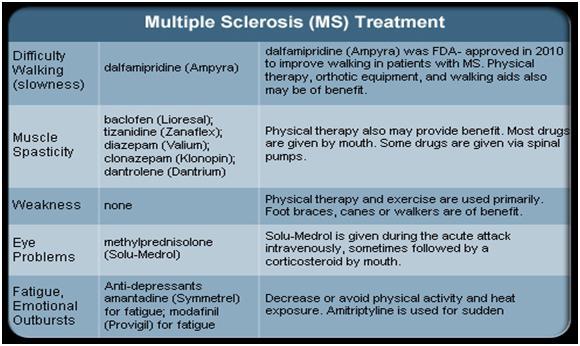
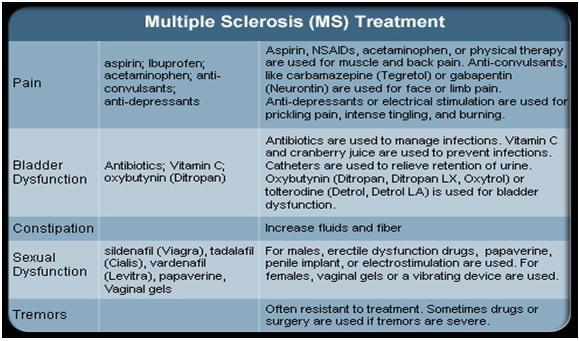
Symptoms management
 |
 |
Rehabilitation
Physical therapy
Occupational therapy
Occupational therapists are skilled in assessing the patient's functional abilities in completing activities of daily living, assessing fine motor skills, and evaluating for adaptive equipment and assistive technology needs. They can provide treatment for cognitive dysfunction.
Treatment approaches for cognitive dysfunction include cognitive retraining and the use of compensatory strategies. Cognitive retraining involves the employment of repetitive drills and mentally stimulating exercises designed to strengthen areas of cognition that are weak.
Compensatory strategies emphasize coping methods or organizational skills to help patients use their strengths to compensate for areas of relative weakness. Such strategies can include the following:
Surgery for Alleviating Symptoms
Surgical procedures that relate to MS are directed primarily at alleviating symptoms, such as dysphagia, significant limb spasticity or contractures, or severe neuropathic pain. Measures include gastrojejunal tube placement, adductor leg muscle tendon release, and rhizotomy, respectively.
Intrathecal pumps for delivery of antispasticity medications (eg, baclofen) can be implanted surgically. Caution should be used with baclofen pumps due to the risk of malfunction and baclofen overdose.